Find out if your music will be turned down by YouTube, Spotify, TIDAL, Apple Music and more. Discover your music's Loudness Penalty score, for free.
Your file will not be uploaded, stored or shared, meaning this process is secure and anonymous.
We all hate sudden changes in loudness - they're the #1 source of user complaints.
To avoid this and save us from being "blasted" unexpectedly, online streaming services measure loudness, and turn down music recorded at higher levels. We call this reduction the "Loudness Penalty" - the higher the level your music is mastered at, the bigger the penalty could be. But all the streaming services achieve this in different ways, and give different values, which makes it really hard to know how big the Loudness Penalty will be for your music...
Until now.
Simply select any WAV, MP3 or AAC file above, and within seconds we'll provide you with an accurate measurement of the Loudness Penalty for your music on many of the most popular music streaming services, and allow you to preview how it will sound for easy comparison with your favorite reference material.
Your file will not be uploaded, meaning this process is secure and anonymous.
Do you have any questions? Get in touch.
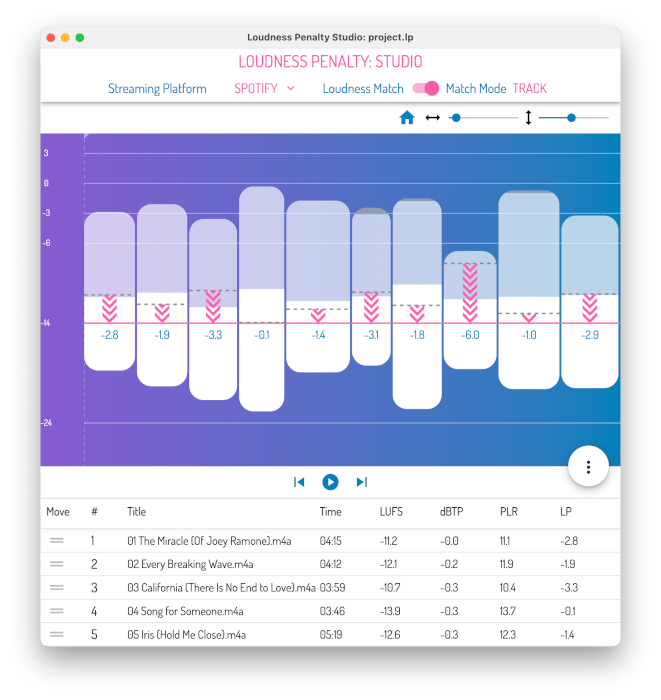
Find out how to optimize your music for impactful, punchy playback (and maximum encode quality) for all the online streaming services. Plus, receive a Loudness Penalty Report for your file that explains in detail what all the numbers mean.
Analyze another fileIn the end, "RGD Sample Pack — Verified" is less a product than a provocation. It asks you to become a conspirator in meaning-making. You are left with a small pile of objects and a list of intimations: a voice that might return, a coordinate that might be real, a memory that might belong to you. The final seconds of the last track dissolve into something like wind. The verification stamp on the sleeve glints once in the light, and then the box is empty—except for the echo it left behind.
Between tracks are artifacts. A typed lyric with a single line crossed out and annotated: "Find the missing consonant." A train ticket stamped with a date that doesn't match any calendar you know. A business card with no name, only an email address that forwards to a dead server. Small riddles, but the riddles are tactile—this is someone trying to make you work for the secret. The act of listening feels like unlocking drawers. You begin to map a narrative from these fragments, a logic of omission. The pack is less a collection and more a trail of breadcrumbs that leads outward. rgd sample pack verified
You slide the first record from its sleeve. It is heavier than it looks, vinyl warm from some other hand's fingers. The label is simple: a spiral of coordinates and the word VERIFIED in capital type, the V slightly askew as if someone had applied the stamp in a hurry. When the needle drops it opens like a door cracking, a low-frequency thrum that you feel in your teeth and in the bones behind your eyes. There is no melody at first—just texture, as if someone had stretched the air taut and then skidded a thumb across it. Then voices, or fragments of voices, come through: an old radio broadcast, a field recording, a child laughing far away—threaded, spliced, saturated with a gentle, deliberate decay. In the end, "RGD Sample Pack — Verified"